
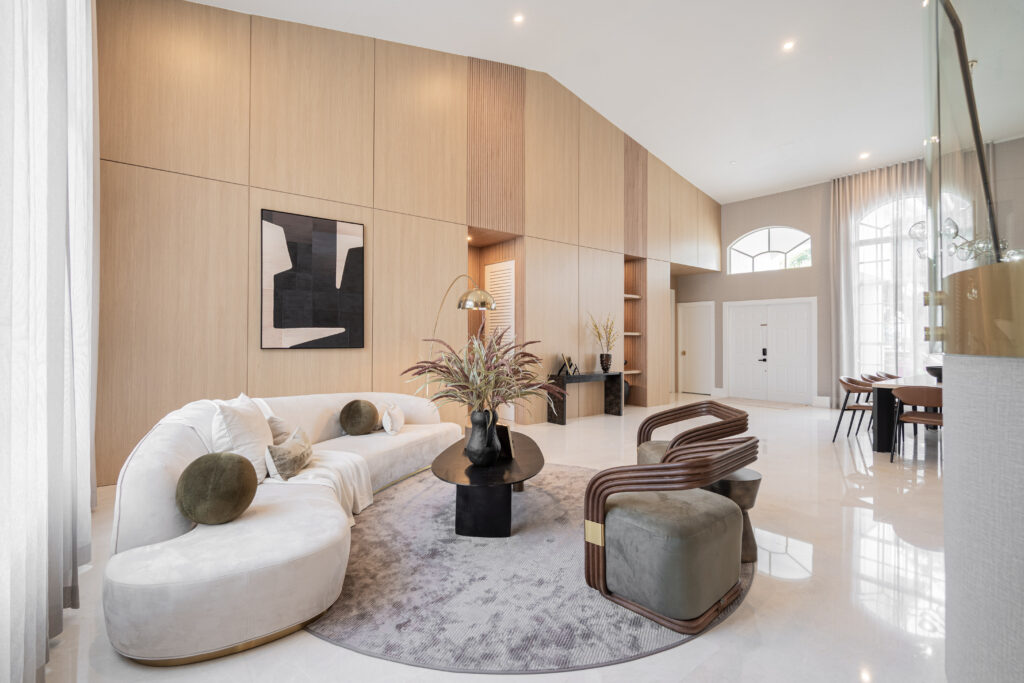
The best custom millwork ideas begin with a clear goal: creating a home that feels more functional, personal, and architecturally complete. Custom millwork is one of the clearest distinctions between a furnished room and a fully resolved interior. Built-in cabinetry, wall paneling, shelving, integrated doors, and architectural details can transform ordinary surfaces into elements that feel permanent, personal, and connected to the home. In luxury residences, millwork is not simply decorative. It improves organization, conceals technology, corrects proportions, and creates a level of craftsmanship that standard furniture cannot reproduce.
The most successful millwork begins with a clear purpose. Every line, material, and compartment should respond to the architecture and the homeowner’s routines. When design and function are developed together, storage becomes part of the visual composition rather than something that must be hidden after the room is complete.
Begin with How the Space Will Be Used
Before drawing cabinets, it is important to understand what the millwork must accommodate. A living room may need space for media equipment, books, art, and entertaining accessories. A primary bedroom may require clothing storage, a television, a vanity, and concealed charging. A home office needs very different dimensions for files, printers, monitors, and work surfaces.
A detailed inventory prevents beautiful cabinetry from becoming impractical. Designers consider the size and quantity of items, how often they are accessed, and whether they should be displayed or concealed. This information determines shelf spacing, drawer depth, door type, ventilation, lighting, and electrical requirements.
Use Millwork to Improve Architectural Proportions
Well-designed millwork can visually correct a room. Full-height panels make ceilings feel taller, horizontal cabinetry can lengthen a wall, and symmetrical built-ins can bring balance to an off-center fireplace or window. In open-plan homes, millwork can also define zones without adding solid partitions.
The design should relate to existing architecture. Door heights, ceiling details, baseboards, columns, and window alignments all influence the millwork grid. When these lines coordinate, the result feels intentional and calm. Misaligned panels or randomly placed shelving can make even expensive materials look unresolved.
Integrate Technology Without Visual Clutter
Televisions, speakers, routers, gaming equipment, and control systems are part of modern life, but they do not need to dominate a room. Custom media walls can conceal wiring, provide ventilation, and organize components behind doors or within dedicated compartments.
Designers coordinate access panels, remote signals, speaker locations, and future maintenance before fabrication. A television may be recessed flush with surrounding panels, hidden behind sliding artwork, or integrated into a dark material that reduces visual contrast when the screen is off. The solution depends on how frequently the equipment is used and the desired atmosphere of the space.
Select Materials for Beauty and Performance
Wood veneer, solid wood, lacquer, metal, stone, glass, leather, and specialty finishes can all be incorporated into millwork. Material selection should support the design concept while responding to wear, moisture, sunlight, and maintenance. A high-gloss finish may create drama in a formal room, while a textured veneer may better conceal fingerprints in a frequently used family space.
A strong design also respects natural materials. Natural materials require thoughtful matching. Veneer direction, grain sequence, stone veining, and metal finish consistency influence the final quality. Samples should be reviewed under the actual lighting conditions whenever possible, because color and sheen can change significantly from the showroom to the residence.
Balance Open Display and Concealed Storage
Open shelving gives homeowners an opportunity to display books, sculpture, photography, and meaningful objects, but too much exposed storage can feel busy. Closed cabinetry creates visual calm and keeps practical items out of sight. A balanced composition usually combines both.
Display areas should be designed around realistic objects rather than generic shelf spacing. Larger art books, tall ceramics, and sculptural pieces need breathing room. Integrated lighting can highlight selected objects, while a quieter background material allows the collection to remain the focus.
Make Hardware Part of the Design
Hardware may be small, but it strongly affects the experience of custom cabinetry. Decorative pulls can introduce metal and craftsmanship, while integrated channels or touch-latch doors create a more minimal appearance. Hinges, drawer slides, and lift mechanisms also determine how smoothly and quietly the millwork operates.
The appropriate choice depends on function. Heavy drawers need reliable hardware, pocket doors require adequate internal space, and frequently used cabinets should open intuitively. Luxury is often felt through these interactions: a perfectly aligned door, a soft-closing drawer, and a handle that feels comfortable in the hand.
Coordinate Lighting from the Beginning
Integrated lighting can reveal materials and make storage easier to use. LED channels beneath shelves, lighting inside wardrobes, and concealed illumination behind panels add depth without visible fixtures. However, lighting must be planned before fabrication so wires, drivers, switches, and access points remain hidden.
Color temperature should coordinate with the room’s other lighting and with the finish of the millwork. Warm light enhances many woods and stones, while incorrect color temperatures can distort material tones. Dimming allows illuminated shelves to remain subtle rather than becoming overly bright.
Allow for Field Conditions and Installation
Detailed millwork must account for field conditions. Walls, floors, and ceilings are rarely perfectly straight. Professional millwork drawings include fillers, reveals, tolerances, and installation details that allow the cabinetry to fit the actual space. Field measurements should be verified after relevant construction is complete and before fabrication begins.
Coordination with electrical, plumbing, air-conditioning, security, and audiovisual systems is equally important. Discovering an outlet, duct, or pipe conflict during installation can compromise the design and increase costs. Detailed drawings and communication between trades protect the finished result.
Invest in a More Personal and Organized Home
The best custom millwork adds lasting value because it is created specifically for the residence. It can turn an unused wall into functional storage, give a room a strong focal point, and support daily routines with less clutter. Unlike temporary furniture, it becomes part of the architecture and helps the entire home feel cohesive.
For trusted technical guidance, review the Architectural Woodwork Institute standards. Explore our interior design services for a cohesive approach. At Andrea Anez Interiors, we design custom millwork with equal attention to aesthetics, function, and technical coordination. From initial concepts through material selection and fabrication details, every element is developed to suit the client and the architecture. Contact Andrea Anez Interiors to explore how personalized built-ins can elevate your home.