
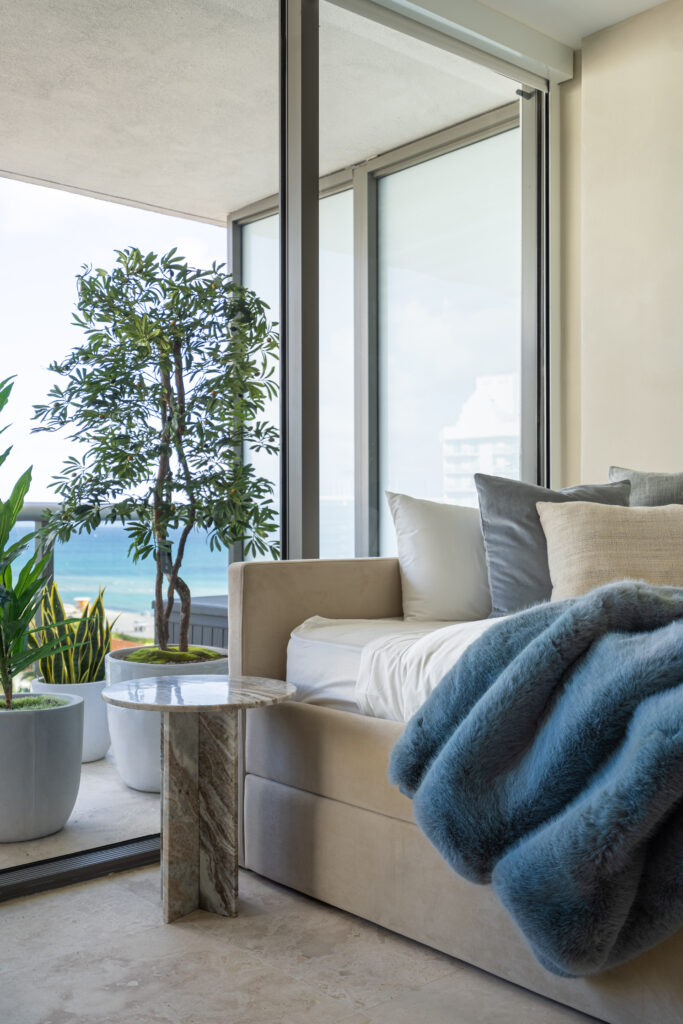
Thoughtful indoor-outdoor living design can make a South Florida home feel naturally connected to its surroundings. The region’s lifestyle is defined by sunlight, water, tropical vegetation, and a relaxed relationship between interior and exterior spaces. A successful indoor-outdoor design captures those qualities without sacrificing the refinement, comfort, and durability expected in a luxury residence. The goal is not simply to add large glass doors or outdoor furniture. It is to create a continuous experience in which architecture, materials, lighting, and furnishings feel intentionally related on both sides of the threshold.
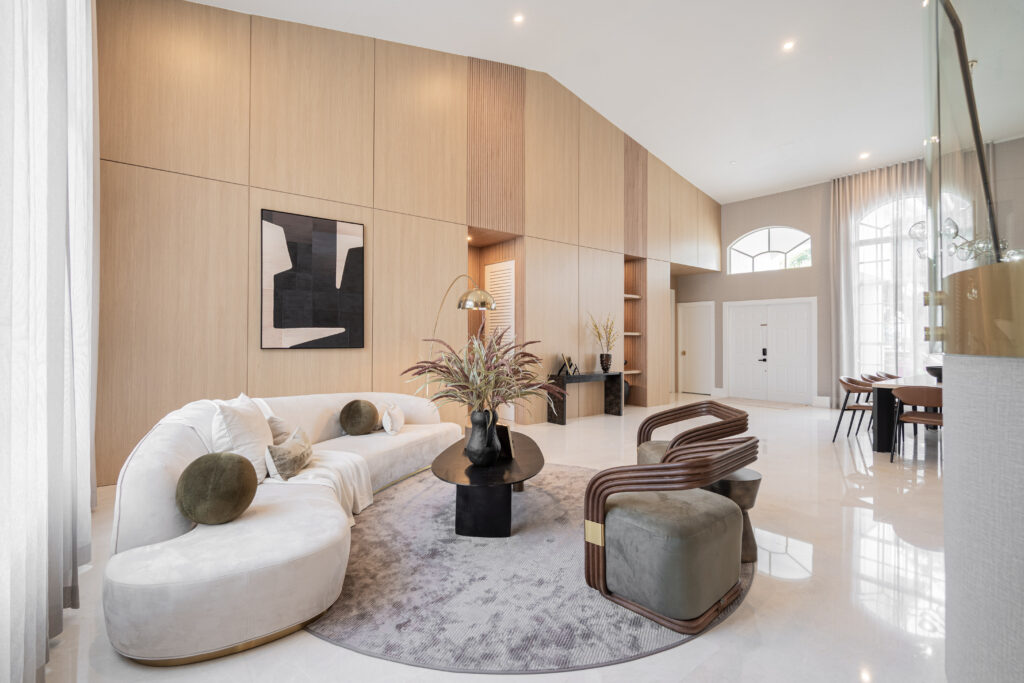
When interior and exterior spaces are planned together, the home feels larger, entertaining becomes easier, and daily life gains a stronger relationship with nature. The most elegant results come from balancing openness with practical considerations such as heat, humidity, glare, storms, privacy, and maintenance.
Establish a Clear Visual Connection
The view from inside should be treated as part of the interior composition. Furniture placement, window proportions, and architectural openings can frame a pool, garden, water view, or sculptural tree much like artwork. Keeping major sightlines clear allows the landscape to become a focal point rather than a background element.
Large sliding or pocket doors can create a dramatic opening, but their position must coordinate with furniture and circulation. A beautiful door system loses its impact if a sofa blocks the view or if guests must move around obstacles to reach the terrace. Space planning should support a natural path from the main living areas to the exterior.
Create Continuity Through Materials
Repeating related materials is one of the most effective ways to connect indoor and outdoor areas. The materials do not always need to be identical, but they should share a compatible color, texture, or visual weight. An interior limestone floor might transition to a slip-resistant exterior stone in a similar tone, while warm wood cabinetry inside may be echoed by weather-resistant wood-look elements outdoors.
Material transitions require technical coordination. Exterior surfaces need appropriate drainage, slip resistance, ultraviolet stability, and resistance to moisture. Selecting products only for appearance can lead to fading, staining, or premature deterioration. Luxury design considers both the initial impression and how the material will perform over time.
Use a Cohesive Color Palette
A consistent palette helps the terrace feel like an extension of the home. Warm whites, sand tones, pale stone, natural woods, muted greens, and ocean-inspired blues work particularly well in Miami residences because they complement the local light and landscape.
Color can also be used strategically. A neutral foundation keeps large surfaces calm, while accent colors can appear in outdoor textiles, artwork, planters, or accessories. Repeating one or two interior accent tones outdoors creates connection without making the design feel overly matched.
Plan Comfortable Outdoor Rooms
An outdoor area should be designed with the same level of purpose as an interior room. Instead of placing furniture around the perimeter, create defined zones for dining, lounging, cooking, conversation, and sun exposure. Each zone should have appropriate proportions and enough circulation for people to move comfortably.
Deep seating can create a relaxed living room atmosphere, while a properly scaled dining table encourages long meals outdoors. Side tables, consoles, and occasional chairs add the same convenience expected inside. The arrangement should also respond to views, wind, sun direction, and proximity to the kitchen or bar.
Select Furnishings for the Climate
South Florida conditions are demanding. Outdoor furnishings must tolerate strong sunlight, humidity, salt air, rain, and frequent use. Marine-grade metals, solution-dyed acrylic fabrics, quick-dry cushion inserts, durable synthetic weaves, and properly sealed surfaces offer better long-term performance.
Performance does not have to look utilitarian. Many luxury outdoor collections offer refined silhouettes, tailored upholstery, and finishes that coordinate beautifully with interior furniture. The key is to review construction and fabric specifications instead of choosing solely from a photograph.
Control Sunlight Without Losing the View
Shade is essential for making outdoor spaces usable throughout the day. Roof overhangs, pergolas, retractable awnings, umbrellas, exterior screens, and strategic landscaping can reduce heat and glare. Inside, solar shades or sheer drapery soften intense light while preserving the relationship with the view.
A layered approach provides flexibility as conditions change. Fixed architectural shade offers consistent protection, while adjustable elements allow homeowners to respond to the season and time of day. Proper shade also protects furniture, flooring, and artwork from excessive ultraviolet exposure.
Coordinate Lighting Inside and Out
At night, exterior lighting becomes part of the interior view. If the terrace and landscape are too dark, the glass can turn into a mirror and the sense of openness disappears. Soft, layered outdoor lighting maintains visual depth and extends the perceived boundaries of the home.
Architectural lighting, step lights, sconces, table lamps, and illuminated landscaping should be balanced carefully. The objective is to reveal pathways, textures, and planting without creating glare. Warm, controlled light generally feels more residential and complements the atmosphere inside.
Integrate Practical Details Discreetly
Successful indoor-outdoor spaces depend on details that are easy to overlook: concealed drainage, insect control, weatherproof outlets, audio, outdoor refrigeration, towel storage, and convenient access to serving pieces. Planning these elements early keeps functional requirements from interrupting the finished design.
Storage is especially valuable. Cushions, accessories, pool equipment, and entertaining supplies need designated locations so the terrace can remain visually calm. Custom cabinetry designed for exterior use can provide organization while supporting the overall aesthetic.
Design for Effortless South Florida Living
A seamless indoor-outdoor home is both elegant and practical. It captures the beauty of the climate, expands the way a family lives, and makes entertaining feel natural. Achieving that result requires coordination between architecture, interior design, landscape, lighting, and construction from the beginning.
At Andrea Anez Interiors, we approach indoor and outdoor areas as one complete design story. Through thoughtful layouts, durable material selections, refined furnishings, and careful attention to every transition, we create South Florida homes that feel connected, comfortable, and distinctly personal. Contact Andrea Anez Interiors to begin designing a residence that celebrates the best of indoor-outdoor living.
For professional resources, visit the American Society of Interior Designers and explore Andrea Anez Interiors’ interior design services.