
Choosing luxury interior materials requires more than selecting beautiful finishes. A luxury interior should look exceptional on the day it is completed and continue to perform beautifully for years. That longevity depends heavily on material selection. Stone, wood, metal, upholstery, wall finishes, and flooring each respond differently to sunlight, moisture, traffic, cleaning, and everyday use. Choosing finishes only because they look attractive in a small sample can lead to disappointment once they are installed throughout a home.
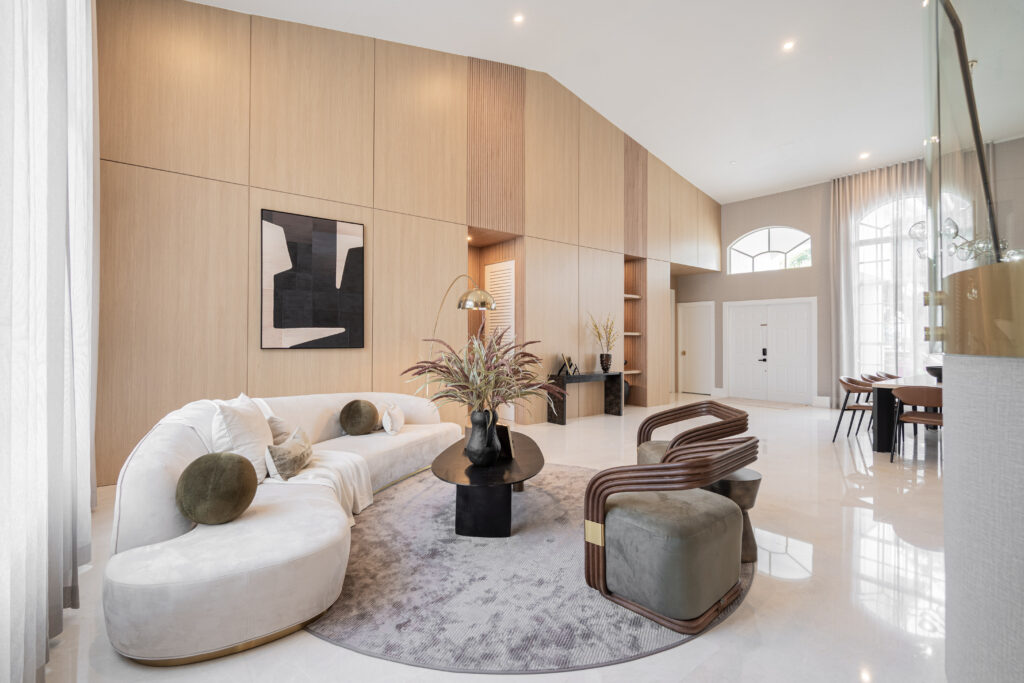
The most successful material palettes balance beauty, performance, maintenance, and context. A finish that works perfectly in a formal living room may be unsuitable for a busy kitchen or a waterfront terrace. Thoughtful selection allows homeowners to enjoy refined spaces without feeling that every surface is too delicate to touch.
Define Performance Requirements First
Before comparing colors and patterns, identify how the surface will be used. Consider foot traffic, children, pets, direct sunlight, humidity, water exposure, food, cosmetics, and cleaning products. These conditions determine which characteristics matter most, such as stain resistance, slip resistance, hardness, ultraviolet stability, or ease of repair.
A realistic conversation about lifestyle is essential. Homeowners who entertain frequently may need highly durable dining upholstery and kitchen surfaces. A seasonal residence may have different requirements from a primary home. Material choices should support real habits rather than an idealized version of how the room might be used.
Understand Natural Stone
Marble, quartzite, granite, limestone, and travertine bring depth and individuality because every slab is unique. However, the names used in showrooms do not always describe performance consistently. Two stones sold under similar labels may differ in porosity, hardness, and sensitivity to acids.
Full slabs should be reviewed whenever possible. Small samples cannot show the complete movement, veining, fissures, or color variation. Designers also plan seam locations, edge profiles, vein direction, and bookmatching before fabrication. Sealing can improve resistance to staining, but it does not make every stone maintenance-free or prevent etching.
Choose Wood with Its Environment in Mind
Natural wood adds warmth and character to cabinetry, flooring, wall panels, and furniture. Species, cut, stain, sheen, and grain direction all influence the result. Because wood is a natural material, variation is expected and should be incorporated into the design rather than treated as a defect.
Humidity and sunlight can affect wood over time. Engineered wood flooring may offer greater dimensional stability than solid planks in some applications, while high-quality veneers can create consistent grain across custom millwork. Protective finishes and appropriate interior climate control help maintain the material’s appearance.
Evaluate Upholstery Beyond Color
Fabric selection involves much more than choosing a beautiful texture. Fiber content, weave, abrasion rating, lightfastness, stain treatment, and cleanability determine how the textile will perform. Delicate silk may be appropriate for decorative pillows in a formal room, but it would not be the best choice for a family sofa.
Performance fabrics have improved significantly and are available in sophisticated textures, patterns, and colors. Solution-dyed materials are especially useful in areas exposed to sunlight or moisture. The cushion construction beneath the fabric also matters, influencing comfort, shape retention, and long-term appearance.
Select Flooring for the Entire Experience
Flooring establishes a visual foundation and must coordinate with architecture, cabinetry, rugs, and transitions between rooms. Large-format stone or porcelain can create continuity, while wood introduces warmth and acoustic softness. The correct choice depends on the desired atmosphere and the conditions of each area.
Practical details include slip resistance, grout width, maintenance, sound transmission, and transitions at doors or level changes. In condominiums, acoustic requirements may affect the underlayment and installation system. Exterior flooring needs drainage and a finish suitable for wet conditions.
Use Metals Consistently but Not Rigidly
Metal appears throughout a home in plumbing fixtures, lighting, hardware, furniture, railings, and decorative details. A coordinated palette creates unity, but every finish does not need to match exactly. Combining two or three complementary metals can add depth when their placement feels intentional.
Finish samples should be compared in person because terms such as brushed brass, bronze, or satin nickel vary between manufacturers. Designers consider undertone, sheen, aging, and maintenance. Living finishes may develop a patina, while plated or coated finishes are designed to remain more consistent.
Test Paint and Wall Finishes in the Room
Color changes with light. A paint that appears warm in a showroom may look gray, green, or yellow in a specific residence depending on window orientation, electric lighting, flooring, and surrounding materials. Large samples should be viewed on multiple walls and at different times of day.
Sheen affects both appearance and durability. Matte finishes create a soft, refined look but may be less washable, while higher sheens reflect more light and highlight wall imperfections. Specialty plaster, wallpaper, wood panels, and textiles can add dimension where paint alone feels too flat.
Review Maintenance Before Approval
Every material requires some care. Before final approval, homeowners should understand recommended cleaners, sealing schedules, repair options, and products to avoid. This information helps distinguish normal aging from preventable damage and allows the household or property management team to care for the home correctly.
Maintenance should be proportional to the homeowner’s expectations. Some clients value the evolving patina of natural materials, while others prefer surfaces that remain highly consistent. Neither preference is wrong, but it should guide the selection from the beginning.
Create a Cohesive Material Story
Durability alone does not create luxury. Materials also need to relate through color, scale, texture, and visual rhythm. A successful palette combines contrast with repetition: smooth stone beside textured wood, soft upholstery against metal, or reflective glass balanced by matte plaster.
Samples should be assembled together rather than approved individually. Seeing flooring, cabinetry, countertops, fabrics, metals, and paint as one composition reveals undertone conflicts and helps maintain a clear design direction. This process also prevents a room from becoming a collection of attractive but unrelated choices.
Invest in Materials Selected for Your Lifestyle
Thoughtful material selection protects both the design and the investment behind it. By considering performance, installation, maintenance, and visual harmony at the same time, homeowners can enjoy elegant interiors that remain practical and age gracefully.
At Andrea Anez Interiors, every finish is evaluated as part of the complete environment. We guide clients through samples, technical requirements, and aesthetic decisions to create personalized palettes suited to the architecture and the way each home is lived in. Contact Andrea Anez Interiors to begin creating a luxurious, durable, and cohesive residence.
For professional resources, visit the American Society of Interior Designers and explore Andrea Anez Interiors’ interior design services.