
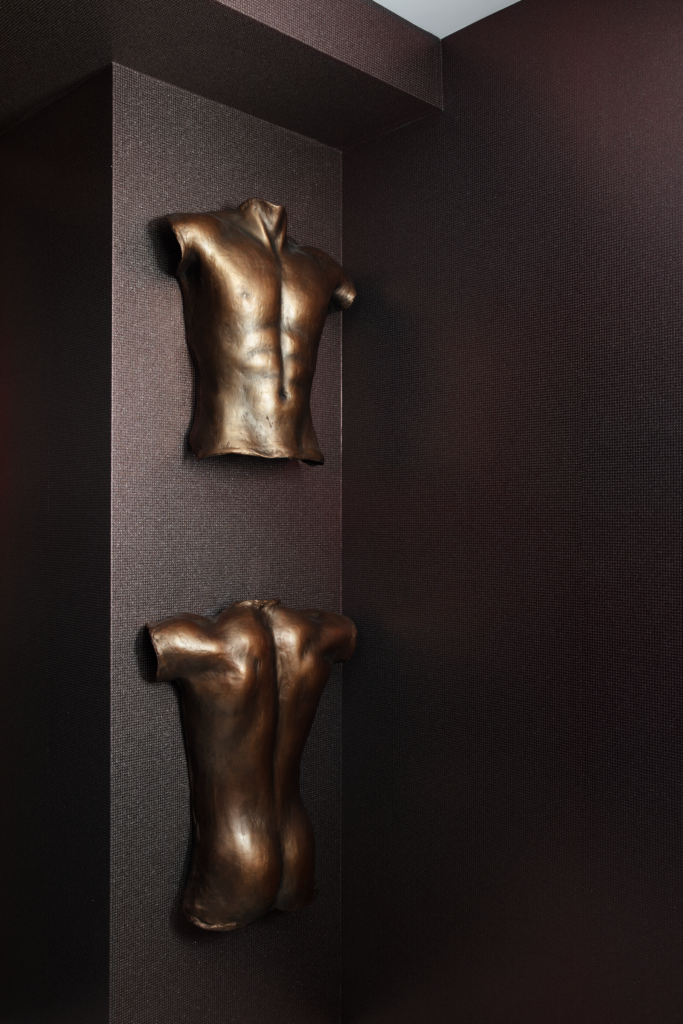
Art in luxury interiors should feel integral to the architecture rather than added at the end. A thoughtful collection brings emotion, history, color, and individuality to a home, while careful placement allows each piece to be experienced fully. Successful art integration begins early, with attention to scale, sightlines, lighting, wall finishes, and the daily life of the residents.
Build the Interior Around Meaningful Pieces
If the homeowners already own significant artwork, those pieces should be documented before the design develops. Record dimensions, framing, condition, preferred orientation, and lighting needs. A large painting may influence the width of a wall, the position of a doorway, or the height of nearby furniture. Sculpture may require a pedestal, a protected circulation zone, or a reinforced base.
Designing around important works does not mean every room must resemble a gallery. The goal is to create a natural relationship between art, furniture, and architecture. Negative space is valuable because it gives each piece room to breathe.
Consider Scale Before Color
Scale has a greater effect than exact color matching. Artwork that is too small can feel disconnected from a large wall, while an oversized piece can overwhelm furniture and circulation. Above a console, sofa, or bed, the work should relate clearly to the width and visual weight of the furnishings below it.
Salon-style groupings can be effective when they follow a deliberate grid, shared spacing, or coherent theme. In quieter interiors, one substantial piece may create more impact. Temporary paper templates are useful for testing dimensions and heights before installing valuable work.
Create Sightlines and Moments of Discovery
Art should be considered from more than one position. A painting at the end of a hallway can draw movement through the home. A sculpture viewed through a doorway can connect two rooms. A smaller piece placed near a reading chair creates an intimate moment that reveals itself gradually.
- Study the view from entries, corridors, and adjacent rooms.
- Keep important pieces away from door swings and crowded circulation.
- Use art to balance architectural features rather than compete with them.
- Place delicate works away from direct sunlight and high humidity.
- Leave enough open wall space for the collection to feel intentional.
Design Lighting for the Artwork
Good art lighting reveals texture and color without producing glare, harsh shadows, or unnecessary heat. Adjustable ceiling fixtures offer flexibility as a collection changes, while picture lights create a more traditional and intimate effect. The angle, beam spread, brightness, and color rendering should be tested for each work.
Natural light must also be managed. Window film, shades, drapery, and strategic placement can help protect sensitive pieces. Dimming allows art lighting to remain balanced with decorative fixtures and ambient light. Explore our guide to layered lighting design for a complete approach.
Coordinate Frames, Walls, and Furniture
Frames do not need to match one another, but they should respect both the artwork and the room. Museum glass can reduce reflections, and archival materials protect works on paper. Wall color influences how a piece is perceived; warm plaster, saturated paint, wood paneling, and pale neutral walls each create a different relationship.
Furniture should support the art without disappearing. A well-composed living room balances visual weight across seating, rugs, tables, and walls. Our guide to creating a timeless luxury living room offers additional planning principles.
Frequently Asked Questions
Should artwork match the interior color palette?
No. Art should be selected for meaning and quality rather than exact color coordination. The interior can create a supportive setting through proportion, lighting, and balanced surrounding materials.
When should art planning begin?
Ideally, significant pieces are considered during space planning and electrical design. Early coordination allows walls, lighting, outlets, blocking, and display furniture to be prepared correctly.
Create a Home That Reflects Your Collection
Art transforms a beautiful residence into a personal one. Andrea Anez Interiors integrates collections with architecture, custom furnishings, lighting, and material palettes so every piece feels considered and every room retains its own character. Explore our interior design services to create a Miami home where art and daily life belong together.