
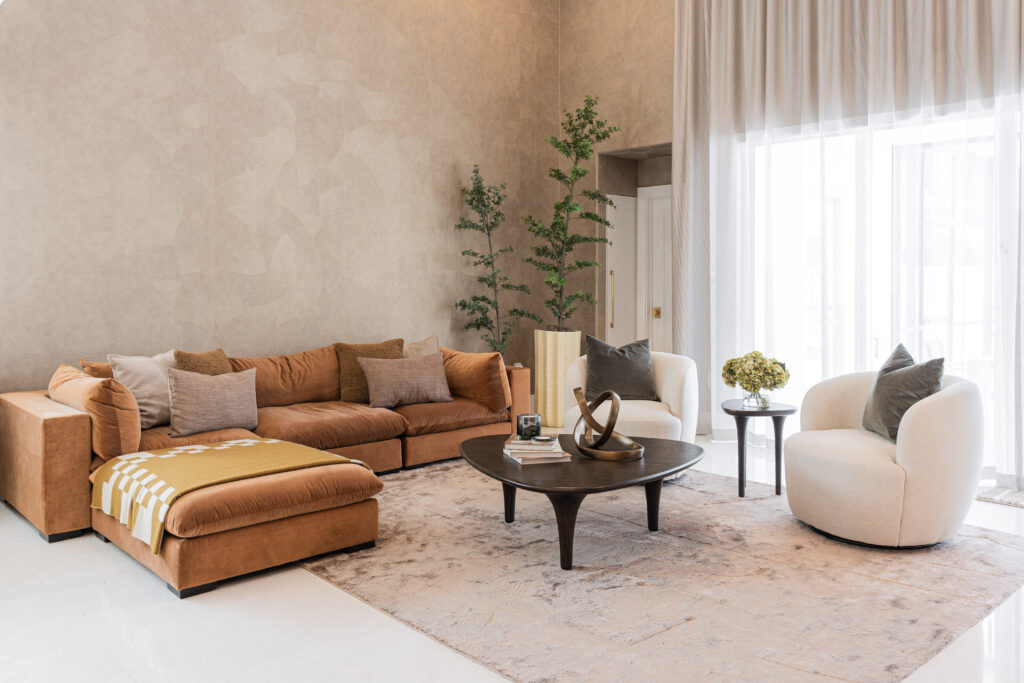
Modern coastal interior design in Miami can feel sophisticated, architectural, and timeless without relying on literal nautical themes. The most successful coastal homes respond to light, landscape, climate, and the relaxed rhythm of waterfront living. Instead of decorating with predictable symbols, designers create a sense of place through proportion, natural materials, fluid circulation, and a restrained palette.
Let the View Lead the Design
When a residence has an ocean, bay, pool, or garden view, the interior should support it rather than compete with it. Furniture placement should preserve sightlines from the entry and principal rooms. Low profiles, open bases, and carefully located focal points allow the landscape to remain present throughout the home.
Window treatments are part of this strategy. Sheer drapery can soften strong daylight, while solar shades help control heat and glare. Blackout layers may be added in bedrooms. Concealed pockets and coordinated tracks keep the architecture clean when treatments are open.
Build a Palette from Nature, Not a Theme
Coastal color does not have to mean bright blue and white. Sand, limestone, warm gray, sea glass, weathered wood, muted green, and deeper ocean tones can create a nuanced palette. The key is to work with undertones that complement the natural light and the fixed architectural finishes.
A limited palette creates continuity, especially in open-plan homes. Contrast can come from dark metal, sculptural furniture, or selected art rather than an abundance of themed accessories. This quieter approach aligns naturally with the principles in our article about quiet luxury interior design in Miami.
Layer Natural Texture for Depth
Texture keeps a neutral coastal interior from feeling flat. Consider oak or walnut, honed stone, woven fibers, linen, plaster, handmade ceramic, and tactile upholstery. Materials should feel authentic and substantial. A subtle change in sheen or weave often adds more sophistication than a bold printed motif.
- Combine smooth stone with warmer, tactile textiles.
- Use natural wood to introduce visual warmth.
- Select rugs that define spaces without overpowering the view.
- Repeat a few textures throughout adjoining rooms.
Specify Materials for the Coastal Climate
Beauty must be supported by performance. Strong sun can fade fabrics and alter wood tones, while humidity and salt air affect metals and exterior-adjacent materials. Solution-dyed performance textiles, suitable sealers, stable substrates, and corrosion-resistant finishes can extend the life of the design.
Material samples should be reviewed in the residence whenever possible. Daylight changes throughout the day, and a finish that appears cool in a showroom may look completely different beside warm flooring or blue water. Read more about balancing beauty and durability in our guide to luxury interior materials.
Connect Indoor and Outdoor Living
Coastal living is most compelling when terraces, balconies, and interiors feel connected. Aligning furniture zones, coordinating floor tones, and repeating selected materials can make the transition feel intentional. Outdoor furniture should relate to the interior design language while remaining appropriate for exposure.
Practical details matter: door clearances, drainage, sun orientation, outdoor lighting, and storage for cushions should be considered early. Our guide to seamless indoor-outdoor living explores these relationships in greater depth.
Use Art Instead of Coastal Décor
Art can communicate a connection to place without becoming literal. Abstract works inspired by movement, horizon, light, or natural forms can feel personal and enduring. Sculpture, photography, and handcrafted objects also add character. Leave enough negative space for important pieces to breathe.
Modern Coastal Design Checklist
- Preserve important views and natural light.
- Choose colors from the environment without copying it literally.
- Verify fabrics and finishes for sun, moisture, and salt exposure.
- Connect indoor and outdoor zones through scale and material.
- Replace themed accessories with meaningful art and objects.
Frequently Asked Questions
Can coastal interiors use dark colors?
Yes. Charcoal, deep blue, bronze, and dark wood can add contrast and frame lighter materials. Used selectively, they make a coastal interior feel grounded and contemporary.
What should be avoided in modern coastal design?
Avoid excessive nautical symbols, overly coordinated furniture sets, and materials unsuited to the climate. Prioritize authenticity, comfort, and craftsmanship.
Design a Coastal Home with Lasting Character
Modern coastal design is strongest when it reflects both the residence and the people who live there. Andrea Anez Interiors creates refined homes through architectural planning, custom detailing, and thoughtful material selection. Explore our interior design services and contact us to develop a coastal interior that feels distinctive, comfortable, and connected to Miami.