
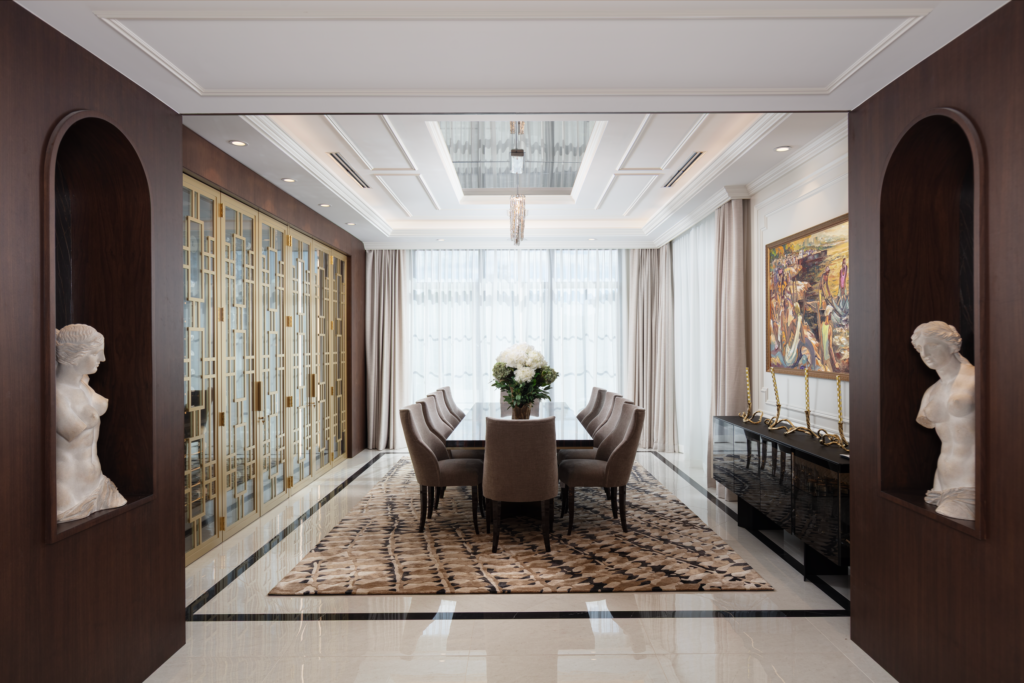
Luxury dining room design should make everyday meals feel special while supporting celebrations with ease. The most successful dining spaces are neither overly formal nor casually unfinished. They combine comfort, proportion, lighting, and personal character so the room feels inviting whether it seats the family on a quiet evening or a full table of guests.
Plan Around the Way You Entertain
Before selecting furniture, consider how the room will be used. How many people dine there regularly? How often do larger gatherings take place? Is food served from the kitchen, a buffet, or at the table? Does the room need space for a bar, wine storage, or display cabinetry? These answers determine the ideal table size, circulation, and supporting pieces.
Allow generous clearance around the table so chairs can be pulled back comfortably and guests can move without interrupting one another. Direct routes to the kitchen and terrace make service easier. In an open plan, rugs, lighting, and ceiling details can define the dining zone without enclosing it.
Choose the Right Table and Chairs
The table establishes the room’s scale and personality. Rectangular tables suit long rooms and larger groups, while round tables encourage conversation and soften square spaces. An extendable table offers flexibility, but the expanded dimensions must be tested against the room. Custom tables can solve unusual proportions and create a distinctive focal point.
Dining chairs should be genuinely comfortable. Seat depth, back support, arm height, and upholstery all matter during a long dinner. A mix of host chairs and side chairs can add variety, but consistent materials or proportions keep the composition cohesive.
Make Lighting the Centerpiece
A chandelier or pendant often becomes the visual anchor of the dining room. It should relate to the table rather than simply to the ceiling. Consider fixture width, hanging height, and the view from adjoining rooms. For long tables, a linear fixture or series of pendants can provide more balanced illumination than one small central piece.
Decorative lighting alone is rarely enough. Add discreet recessed lights, sconces, picture lights, or illuminated cabinetry to create depth. Every source should be dimmable, allowing the room to move from practical family use to an intimate dinner. Our guide to layered lighting design explains how these elements work together.
Layer Materials, Art, and Texture
Dining rooms invite richer materials because they are experienced closely and often in evening light. Wood, lacquer, stone, metal, leather, and textiles can create a sophisticated atmosphere. A rug softens acoustics and visually anchors the table, while drapery adds warmth and controls glare.
- Select a rug large enough to remain beneath chairs when they are pulled out.
- Use durable, cleanable fabrics where spills are likely.
- Coordinate the table finish with nearby flooring without matching it exactly.
- Choose artwork that can be appreciated from a seated position.
- Limit accessories so serving surfaces remain functional.
For lasting selections, explore our advice on luxury interior materials.
Include Storage and a Serving Surface
A sideboard or custom cabinet can hold linens, serving pieces, glassware, and special collections. It also provides a useful surface for flowers, lamps, or buffet service. In smaller homes, built-in storage can use shallow wall space efficiently and conceal practical items behind elegant doors.
Frequently Asked Questions
How large should a dining room chandelier be?
The fixture should be scaled to the table and room rather than chosen by a single formula. It must illuminate the full tabletop without blocking sightlines across it. Mocking up the dimensions before purchase is helpful.
Can a formal dining room feel relaxed?
Yes. Comfortable chairs, warm materials, flexible lighting, and personal art can make a refined room feel welcoming. Luxury comes from quality and thoughtful planning, not stiffness.
Create a Dining Room Made for Connection
The dining room is ultimately a setting for conversation, celebration, and memory. Andrea Anez Interiors coordinates furniture, lighting, materials, art, and custom storage to create dining spaces that feel polished and effortless. Explore our interior design services to design a Miami dining room that supports everyday life and exceptional occasions.